Deep Learning Driven Object Annotation With Human Verification
Nov 20, 2025
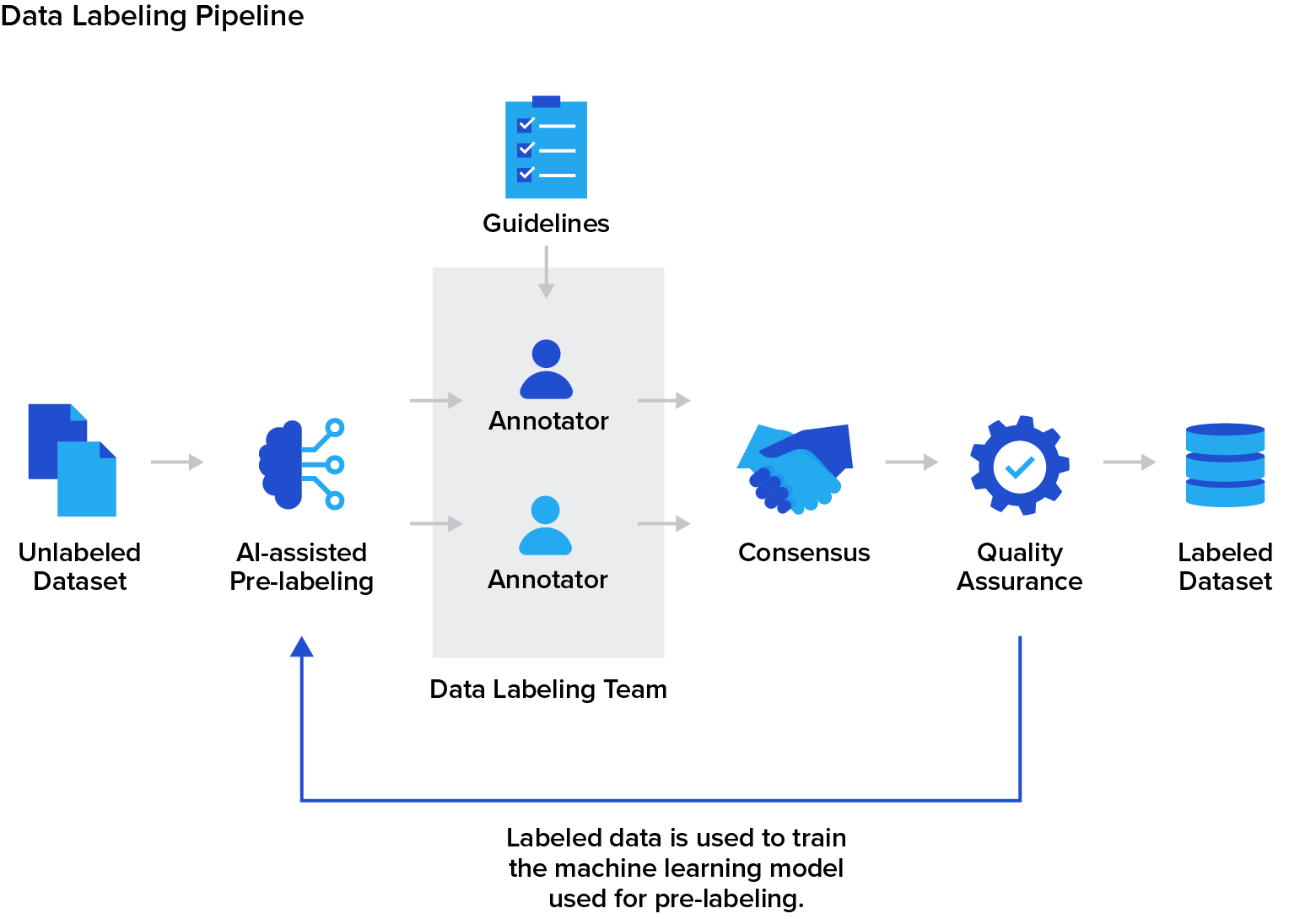
This project builds an end-to-end object annotation pipeline that integrates YOLOv8 inference with structured human verification. The system accelerates dataset creation by combining automated bounding box prediction with manual review steps that ensure annotation accuracy.
Raw images pass through a detection model, then each prediction is inspected by a human who approves or corrects the annotation. Verified samples are exported into standardized formats suitable for training deep learning models.
Problem Statement
High performance detection models depend on precise labeled datasets. Manual annotation alone is slow and error prone, which restricts scalability. Inconsistent bounding boxes degrade training stability, introduce label noise, and reduce generalization.
- Annotation latency scales linearly with dataset size.
- Human mistakes introduce noisy targets and reduce model performance.
- Most workflows lack a combined detection and verification structure.
Deep Learning Inference Layer
The system uses YOLOv8 Nano as the initial detector. Each image is transformed into a tensor and passed through the convolutional backbone and detection head.
YOLO predicts bounding box coordinates, objectness logits, and class distributions. The full objective combines localization, objectness, and classification components:
Predictions are filtered using Non Maximum Suppression to remove redundant overlapping detections.
Human in the Loop Verification
After inference, each prediction is reviewed by a human operator. The interface displays the detected bounding boxes for approval or correction. This creates a hybrid labeling pipeline where the model proposes and the human confirms.
Data Management and Export
Verified annotations are exported in JSON, CSV, and PNG formats. The final dataset integrates seamlessly with training pipelines for robotics, industrial inspection, and research.
annotations/
├─ image_001.json
├─ image_001_overlay.png
├─ labels.csv
└─ metadata.json
Applications
- Dataset creation for deep learning research.
- Robotics and real-time embedded vision systems.
- High precision annotation for industrial automation.
- Bootstrapping new detection models at low labeling cost.
References
- Bochkovskiy et al. YOLOv4: Optimal Speed and Accuracy of Object Detection.
- Jocher et al. Ultralytics YOLOv8 Documentation.
- Redmon et al. You Only Look Once: Unified Real-Time Object Detection.
- Goodfellow et al. Deep Learning. MIT Press.
- Girshick et al. Rich Feature Hierarchies for Accurate Object Detection.